Hexonic: Heat exchanger selection directly affects the efficiency of CIP systems, pasteurization and heat recovery in the food industry


Change language: Bulgaria Serbia
In the food and beverage industry, where pasteurization and CIP (Clean-in-Place) systems are standard components of production lines, heat exchanger selection can play a decisive role in reducing energy costs, improving reliability and shortening cleaning times. However, choosing the optimal solution depends not only on the thermal capacity of the heat exchange equipment, but also on factors such as hydraulic performance, hygienic design and heat recovery capabilities. Experts from Hexonic, one of the leading developers and manufacturers of heat exchange solutions, explained the topic in greater detail to BalkanEngineer.com.
CIP systems and the importance of heat exchange for their efficiency
CIP systems are designed to clean equipment, including pipelines, tanks and other components, without the need for disassembly. The efficiency of this process, however, depends directly on the temperature of the cleaning solution, the concentration of cleaning agents, contact and circulation times, and hydrodynamic conditions. This makes the heat exchanger essential, as it is responsible for rapidly reaching and maintaining the required temperature.
“Insufficient heat exchanger capacity in CIP applications can lead to longer cleaning cycles, while incorrect selection and sizing may result in higher energy consumption, pressure losses and an inability to control the temperature precisely,” Hexonic explained. “This means that, when designing the installation, it is necessary to consider tank volumes, flow rates, heating times and the chemical compatibility of the materials,” the specialists added.
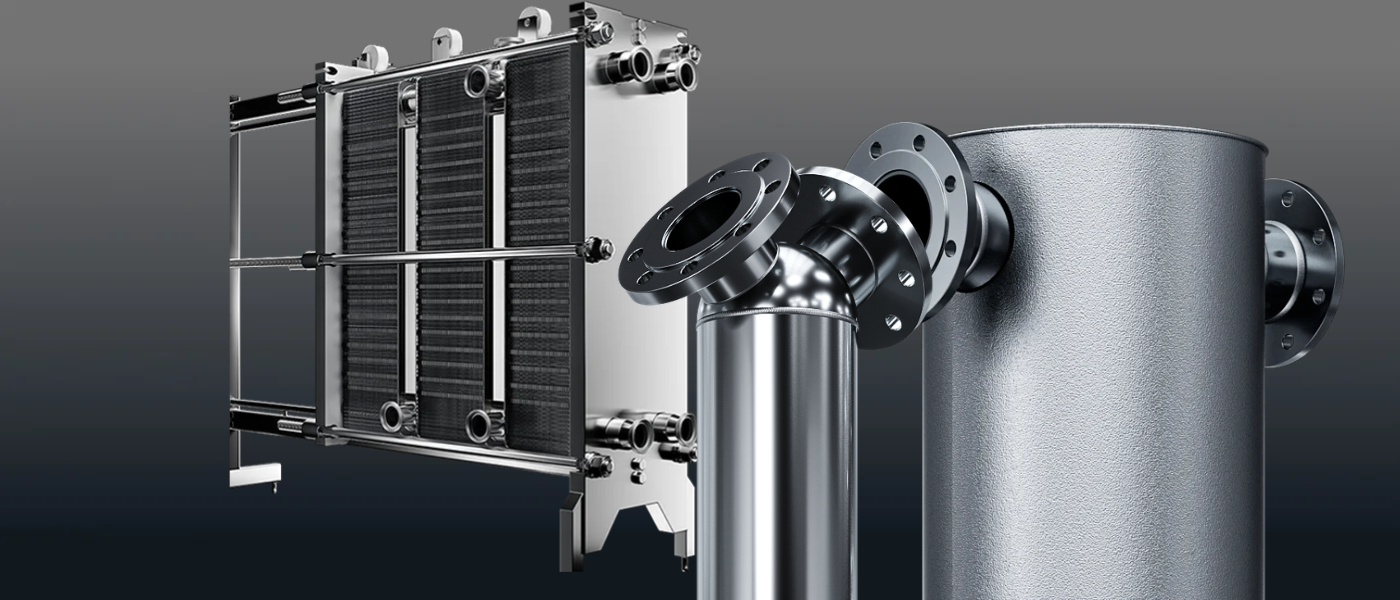
For CIP applications, Hexonic offers the JAD and HAD shell-and-coil heat exchangers. The JAD range includes units with an all-stainless-steel construction, while the HAD range provides a fully equipped, installation-ready solution.
Pasteurization, heat recovery and the impact of heat exchanger selection
Pasteurization, in turn, is a process directly linked to the production of the final product, in which the raw material is heated to a precisely controlled and consistent temperature. The temperature profile must meet microbiological requirements while also taking into account the characteristics of the specific product and subsequent processing operations. For example, an insufficiently high temperature may compromise product safety, whereas an excessively high temperature may adversely affect product quality.
At the same time, pasteurization offers significant potential to improve the energy efficiency of the entire production line through heat recovery. “The already pasteurized product transfers heat to the incoming cold product through a heat transfer surface, without the two streams coming into contact with each other. This reduces the thermal capacity required for heating, as well as the cooling capacity needed to cool the processed product,” Hexonic explained.
The JAG plate heat exchanger is suitable for this process, thanks to its intensive heat transfer performance and compact design. It allows the heat transfer surface area and hydraulic characteristics to be adapted to the requirements of each specific project. The specialised Multisection solution is based on JAG technology but enables several process sections to be integrated into a single system for heating, heat recovery and cooling.
“In the food and beverage industry, materials, gaskets, channel geometry and cleaning capabilities play a significant role in heat exchanger selection,” Hexonic emphasised.
The company's team identifies five factors for optimal heat exchanger selection in the food and beverage industry:
- Actual operating conditions, not just nominal capacity: Temperatures, flow rates and fluid properties must reflect the actual operating conditions, including partial loads and variations throughout the production cycle.
- Balancing heat transfer performance and pressure losses: A high heat transfer coefficient is an advantage only when achieved with acceptable hydraulic losses. Otherwise, savings in thermal energy may be partially offset by higher electricity consumption for pumping.
- Fouling of heat transfer surfaces: Deposits reduce heat transfer efficiency and can increase pressure losses. The design must therefore take into account the tendency of the process fluids to cause fouling, the required cleaning frequency and accessibility for maintenance.
- Hygiene and product safety: Where equipment comes into direct contact with food products, appropriate materials, gaskets and hygienic design are essential. For certain applications, the risk of cross-contamination between process fluids must also be assessed.
- Total cost of ownership over the equipment's service life: The purchase price is not the only economic criterion. Energy consumption, maintenance costs, spare parts, cleaning requirements and production downtime determine the actual cost of the equipment over time.
“It is important to note that reducing operating costs does not always require replacing an existing heat exchanger with a model featuring a larger heat transfer surface area. In some cases, better results can be achieved by optimising flow rates and temperature profiles, improving heat recovery or adapting the equipment to actual operating conditions,” Hexonic commented. “This is particularly important for facilities handling a diverse product range, operating under variable production loads and facing limited time for cleaning and maintenance,” the company added.
“Ultimately, the objective is to achieve a technically and economically justified solution that combines efficient heat transfer, reliable operation, hygienic design and optimal operating costs. Therefore, when a manufacturer is planning to upgrade its CIP system or pasteurization line, the first step should be to consider the technical parameters, including the process fluids, flow rates, inlet and outlet temperatures, available heating medium and process requirements. Only after these factors have been analysed can the appropriate heat exchange technology be selected. Our team is available to assist with this process,” Hexonic concluded.
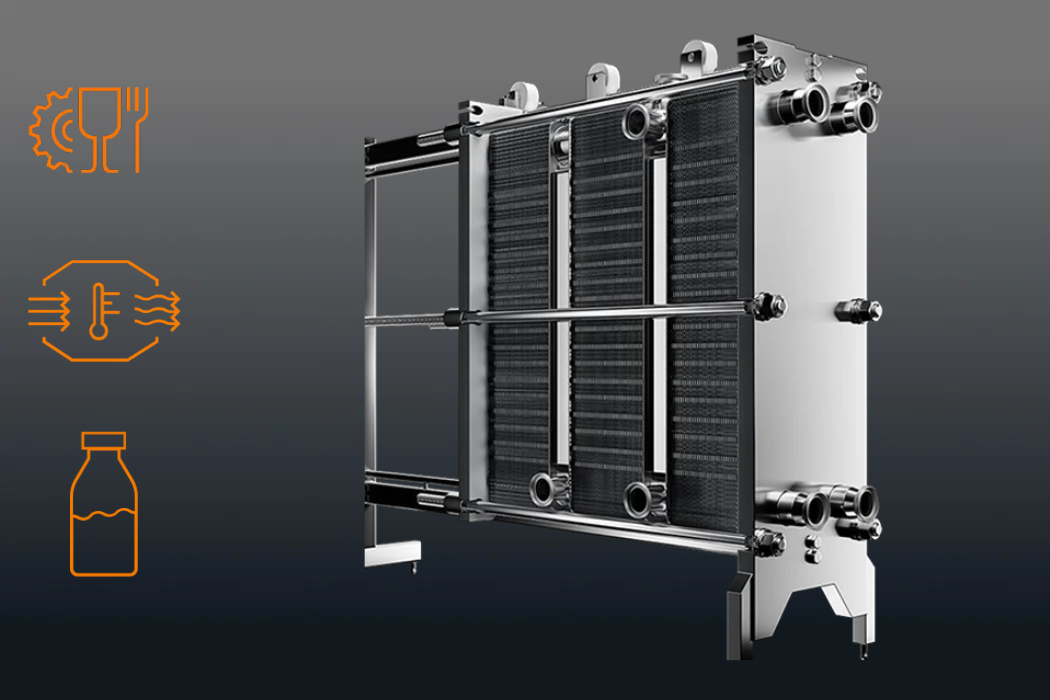
Image source: Hexonic